
Short answer : Yes.
Almost all self contained emergency lights have a battery that are designed to be replaced. They are designed to last about 4 years, with regular testing which actually does the battery some good. There are many factors that affect the life of a battery, that is why regular testing is a must.
Extremes of heat and cold for prolonged periods can dramatically reduce the life of the battery. This could mean that you are changing the battery in your emergency light more often.
Types of batteries
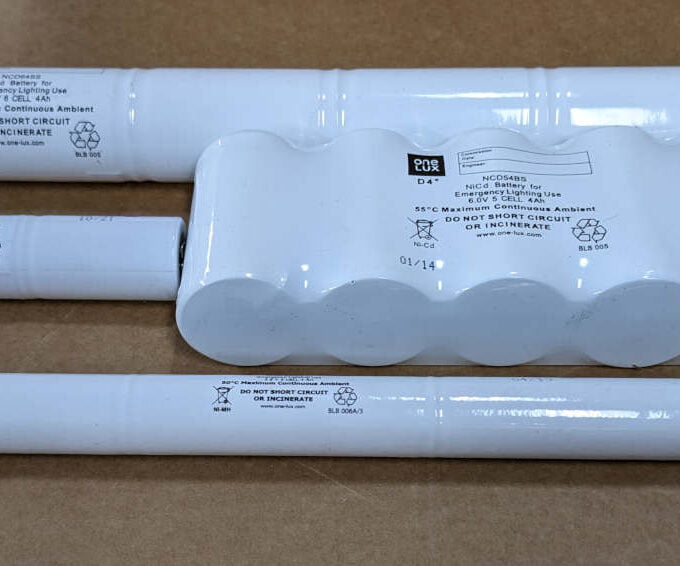
Throughout the years battery technology has advanced quickly. This makes it hard to pinpoint exactly what battery you have in your emergency light. Typically, emergency lights come with:
- NiCd – Nickel–cadmium
- NiMH – Nickel–metal hydride
- LiFePO4 – Lithium iron phosphate
All batteries will have identification on them. It is important to match like for like when replacing them. This is because the charging control circuit will have been designed to charge that specific type of battery. If you replace with a different type of battery it will probably damage it. They all charge slightly different.
How to Read an Emergency Light Battery Pack Specification
Once you’ve identified the battery pack in your fitting, you’ll notice a label with a series of numbers and letters that can look a little cryptic at first. Understanding what these mean makes it much easier to source the correct replacement.
Voltage
The two most important figures to look for are the voltage (V) and the capacity (mAh or Ah). Voltage is determined by the number of cells in the pack and the battery chemistry. For example, NiCd and NiMH cells each produce 1.2V per cell, so a 4-cell pack will be labelled 4.8V, while a 5-cell pack will read 6V. LiFePO4 cells operate at a higher nominal voltage of 3.2V per cell, so even a single-cell LiFePO4 pack will have a noticeably different voltage. This is one of the key reasons you must never swap one chemistry for another without confirming compatibility. The charging circuit in your fitting is calibrated for a specific voltage profile.
Amps
Capacity, shown in milliamp-hours (mAh) or amp-hours (Ah), tells you how much energy the battery can store. A higher mAh figure generally means a longer emergency duration. UK emergency lighting regulations typically require a minimum of 1 or 3 hours of maintained illumination depending on the location, and your battery’s capacity is what delivers that. When replacing, always match or exceed the original mAh rating, fitting a lower-capacity pack could mean your emergency lights fail to meet their rated duration during a test or real emergency.
You may also see a cell configuration on the label, such as “3S1P” or simply the physical arrangement described as a stick or a pack. The configuration tells you how many cells are wired in series (boosting voltage) or in parallel (boosting capacity).
Tips
- Match the voltage exactly
- Match or better the capacity
- Make sure the physical dimensions and connector type fit your fitting.
- And remember ALWAYS use the same chemistry as your existing battery.
- You simply order the exact same battery type and shape that you have when replacing the battery.
Secure
The replacement battery will be secured in the same way as the old one. This will be either via battery end caps or perhaps screwed or zip tied into the fitting. Either way it is important to secure the battery inside the emergency light. This is because they are relatively heavy and could damage the control gear if not secured.
Is it a battery?
At the start I mentioned that most self contained emergency lights have replacement batteries. If you have a central battery system then the actual lights are not classed as self contained. Their battery is in another part of the building and not inside, so that rules them out. However we now have some self contained emergency lights that use supercapacitors.
Supercapacitors are not batteries and are generally not replaceable and you probably wouldn’t need to either. We use supercapacitors in our emergency lights for cold stores. This is because they can tolerate much lower temperatures and can last 10 years +. See our cold store light here.
Do I have to be qualified?
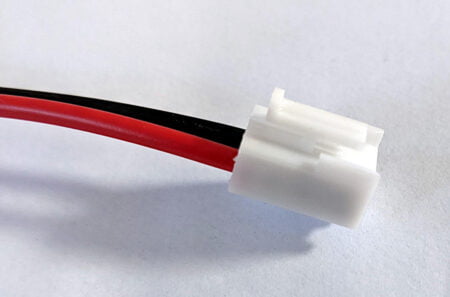
No. But you should be competent with working with wiring. First thing, ensure there is no power supplying the fitting, if your unsure on how to do this talk to your electrician. Then it should be a simple procedure of unclipping the old battery and removing from the fitting then reversing the steps to put the new one back in.
Once the fitting is back installed restore the power and check that the green charging light is illuminated.
Additional Reading…
When to Test Emergency Lights
How to Test Emergency Lights
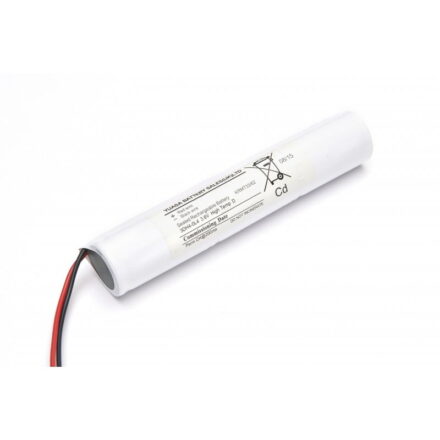
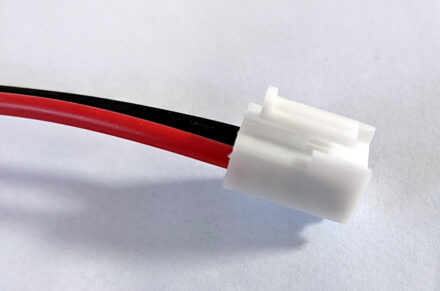
Replacement Battery X-CSE3M 3.6V 1.5Ah NiCd
- 3.6 volt 1.5Ah cell stick configuration
- Nickel Cadmium (NiCd)
- High temperature cells comply with BS EN 60285
- Provides 3 Hour emergency duration for your X-CSE3M bulkhead