
For years, the rule was simple enough: make sure the middle of your escape route was lit. Keep the centre line illuminated, tick the box, move on.
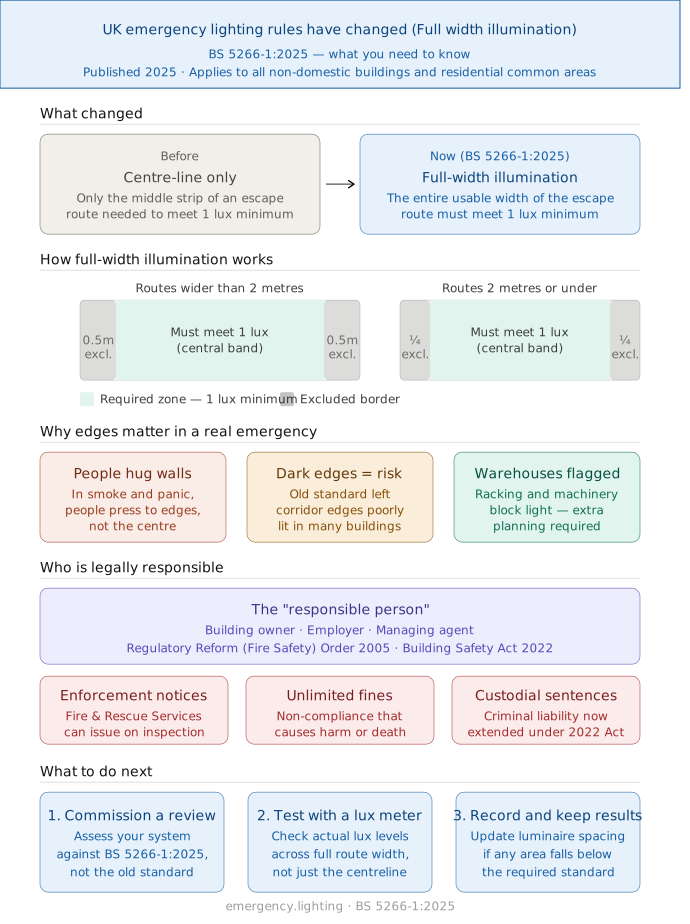
That standard has now changed. With the publication of BS 5266-1:2025 — the UK’s updated code of practice for emergency lighting — full-width route illumination is now required. Every part of the escape route must be lit, not just the strip down the middle.
It sounds like a small technical tweak. In practice, it has real implications for how buildings are designed, assessed, and maintained.
What changed, and why it matters
The previous approach focused on the centreline of an escape route as the reference point for measuring minimum illumination (1 lux). As long as that central strip met the standard, a system could pass inspection. Even if the edges of the corridor were significantly darker.
The problem is that people don’t evacuate in a neat single file down the centre of a hallway. In a real emergency — smoke, panic, low visibility — people move along walls, press against the sides of stairwells, and bunch at doorways. The edges of escape routes are exactly where people are most likely to be, and under the old standard, those edges were often the least well-lit parts of the route.
BS 5266-1:2025 closes that gap. The minimum 1 lux requirement now applies across the full width of the escape route. For routes wider than 2 metres, a 0.5 metre border is excluded on each side. For narrower routes, a quarter-width border is excluded. Everything in between must meet the standard (a central band if you like).
What does this mean in practice?
If your emergency lighting system was designed and installed to the previous standard, it may no longer provide adequate coverage under the new rules. Particularly in wider corridors, open-plan floors, or routes with irregular layouts.
This is not just a theoretical concern. Luminaire spacing that was previously compliant may now leave areas of the route below the required illumination level. A system that looked fine on paper could now have gaps.
For building owners, facilities managers, and responsible persons, this means:
Existing systems should be reviewed against the new standard. A photometric assessment — checking actual lux levels across the full route width, not just the centreline — will confirm whether your current installation remains compliant.
New installations must be designed to the 2025 standard from the outset. Designers and installers need to account for full-width coverage in their luminaire calculations, with closer attention to spacing, output, and any physical obstructions like racking, signage, or structural columns that could block light at floor level.
Industrial and warehouse environments face particular scrutiny. The standard specifically flags that stored goods and machinery can easily obstruct light, and that escape route layouts in these settings often require more careful planning than in standard office or commercial premises.
Who is responsible?
Under the Regulatory Reform (Fire Safety) Order 2005, the “responsible person” — typically the building owner, employer, or managing agent — carries legal duty for ensuring emergency lighting is adequate. The Building Safety Act 2022 has since extended criminal liability further. This now means that failure to comply is no longer just an administrative matter.
BS 5266-1:2025 is the standard that fire inspectors will use as their benchmark. Local Fire and Rescue Services have the authority to issue enforcement notices, and non-compliance that contributes to injury or loss of life can result in unlimited fines or custodial sentences.
What should you do next?
If you manage or own a non-domestic building (or a residential property with common areas) the practical first step is straightforward: commission a review of your emergency lighting against the updated standard. Many reputable fire safety contractors now offer assessments specifically benchmarked to the 2025 changes.
The shift to full-width illumination is one of the more significant technical updates in the new standard. But it reflects something the industry has known for a long time: emergency lighting exists to protect real people in real emergencies. And real people don’t always walk down the middle.
Recommended products

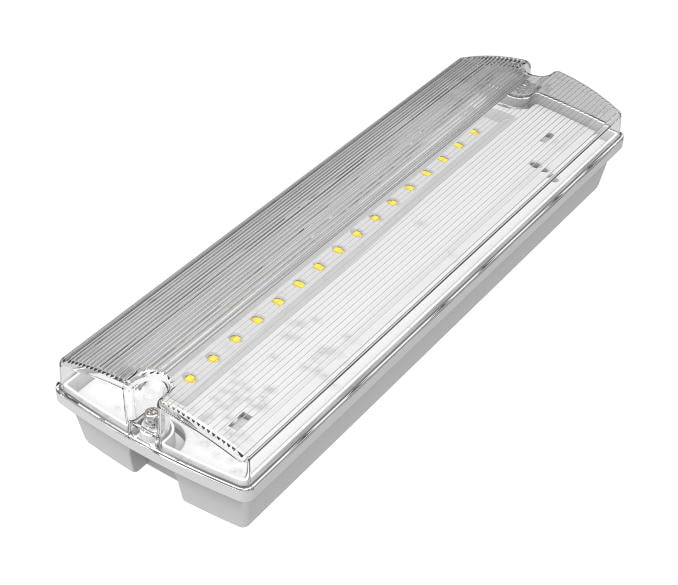
Bright 3W LED Emergency Bulkhead Maintained/Non Maintained
£11.99 (£14.39 inc VAT)
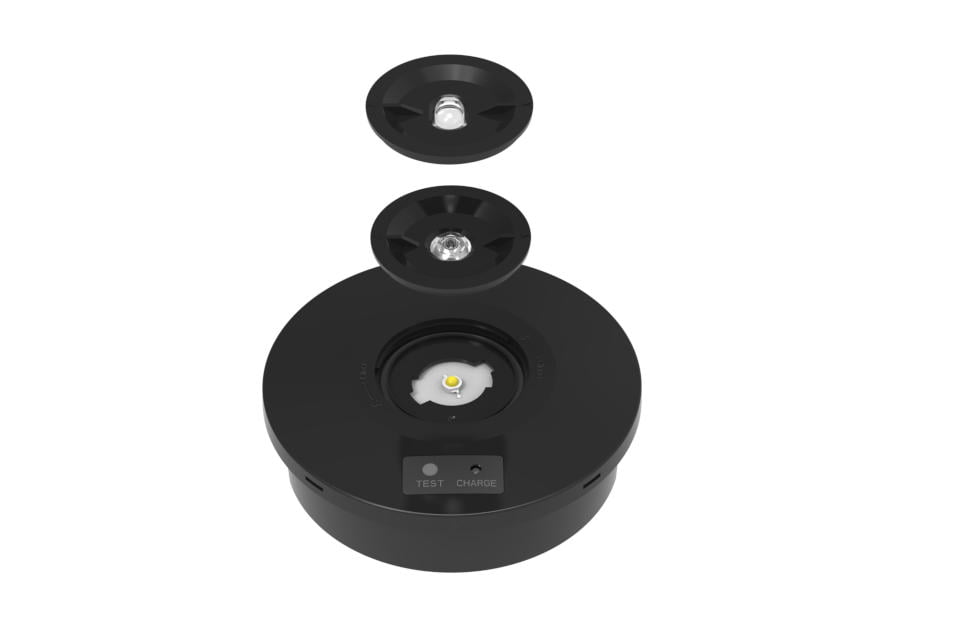
Escape Emergency Spot Round
Price range: £31.99 through £39.99
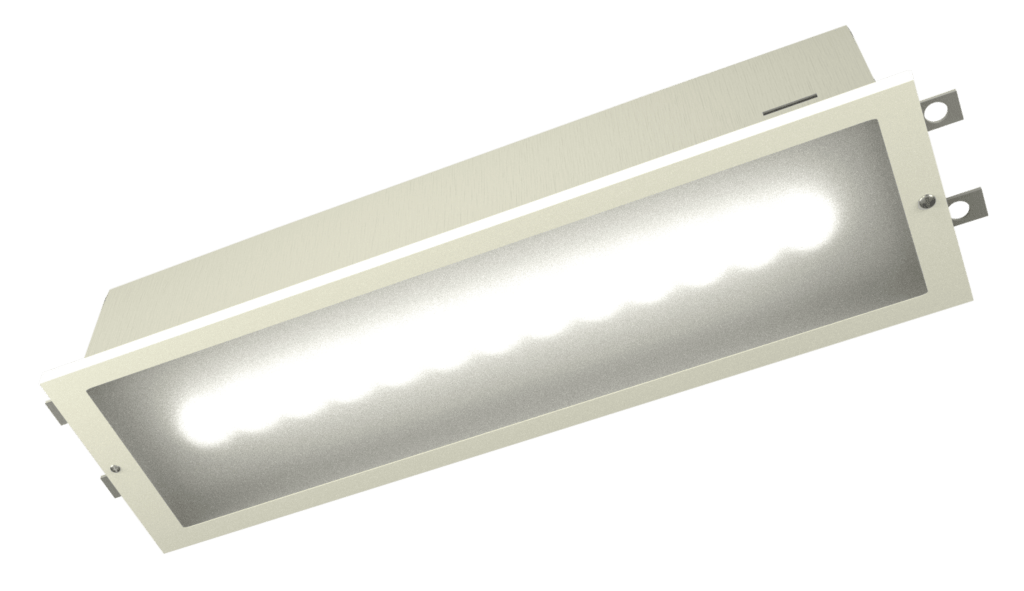
Fully Recessed LED 3HR Bulkhead
Price range: £51.99 through £155.48
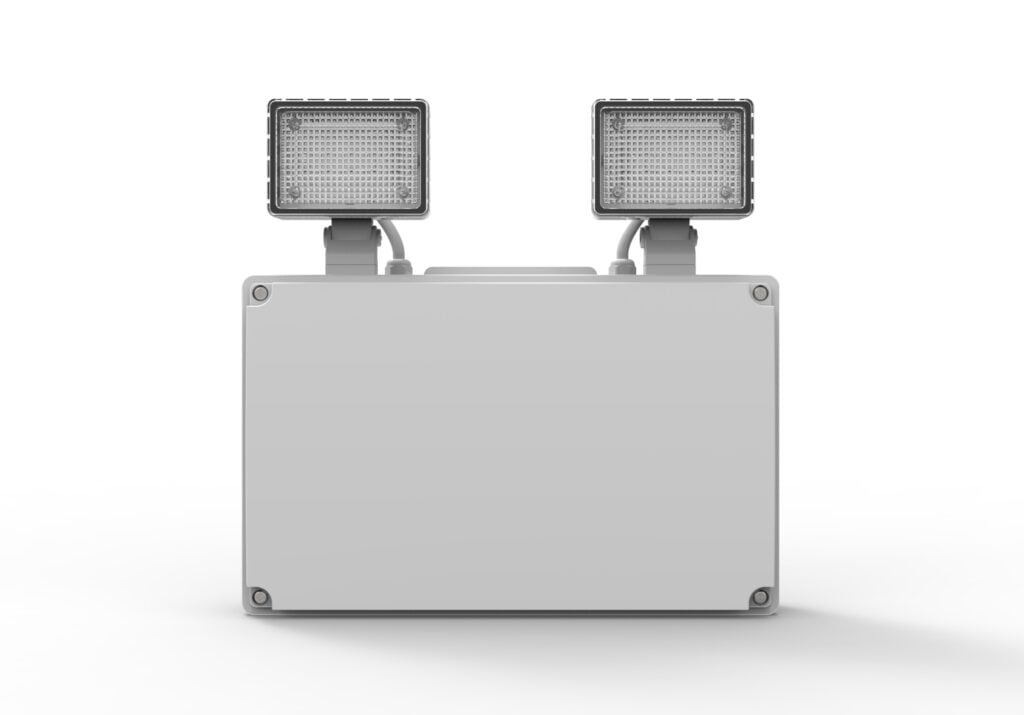
High Power LED Emergency Twinspot IP65
£59.99 (£71.99 inc VAT)
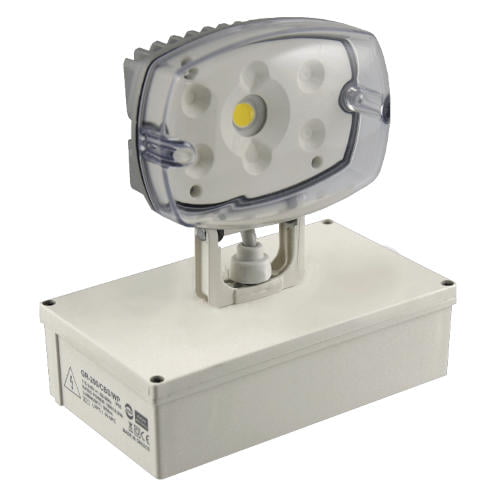
Mono Floodlight for Central Battery Systems
£137.50 (£165.00 inc VAT)
Summary
Real people don’t always walk down the middle.
In a real emergency, people keep to the edges. Especially if there is smoke.
Full width light on escape route.
Now required to have the majority of the escape route illuminated. Over 2 meters then 1/2 meter excluded either side. Under 2 meters 1/4 of width excluded either side.
Check on your next inspection / test.
On your next inspection test with a light meter. Record and keep the results. Update / alter your emergency lighting if areas of the escape route are not up to standard.